Colonial Kolkata Walking Tour
Palaces of the Raj, Dalhousie Square, and the trading heart of the East India Company
Duration
3.5 Hours
Group Size
Max 10 explorers
Language
English
Trail Pace
Easy walking
About this experience
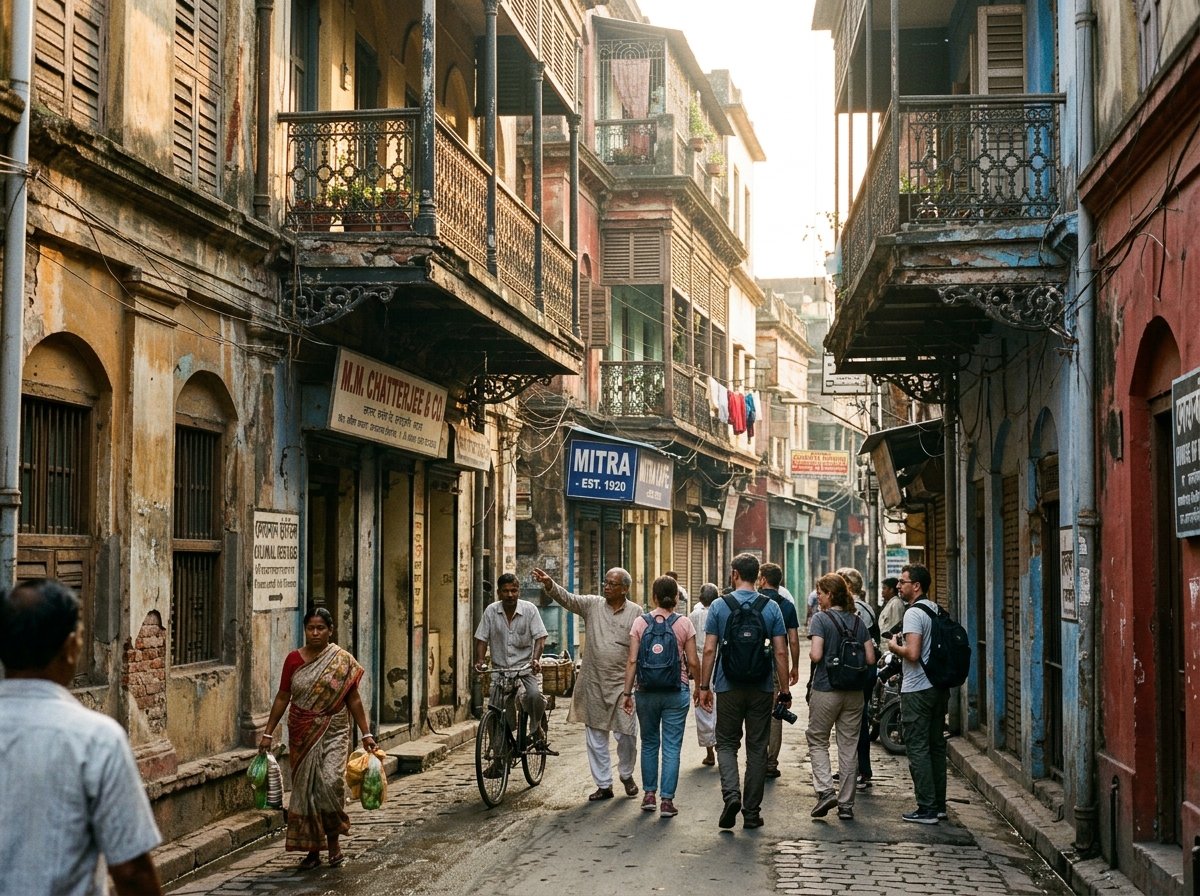
Before New Delhi, Calcutta was the second city of the British Empire. Around Dalhousie Square (B.B.D. Bagh) stood the military, legal, and financial architecture that governed hundreds of millions.
Experience Highlights
Visit to St. John’s Church (1787) and Johann Zoffany’s controversial "Last Supper" painting.
The Job Charnock Mausoleum — the oldest surviving colonial brick structure in Kolkata.
Architectural decoding of Writers’ Building and the Greco-Roman GPO dome.
The story of the 1930 Writers’ Building assault by Binoy, Badal, and Dinesh.
Artisan bakery tea stop at a 100-year-old Anglo-Indian tea room.
The Trail Route & Itinerary
01
07:30 AM
St. John’s Churchyard & Charnock Mausoleum
Explore the earliest colonial cemetery, the Black Hole Monument memorial, and the Rohilla War memorial pyramid.
02
08:30 AM
Raj Bhavan & Council House Street
Observe Lord Wellesley’s neoclassical palace modeled after Kedleston Hall in Derbyshire, and the currency buildings.
03
09:30 AM
Lal Dighi & Writers’ Building
Walk the edge of the historic water tank to trace the evolution of the junior clerks’ quarters into the seat of Bengal governance.
04
10:30 AM
General Post Office & River Ghat Dispersal
Step inside the monumental GPO dome built on the ramparts of Old Fort William. Concluding reflections by the Hooghly.
What's Included & What's Not
Included in your walk
- Led by an academic historian specializing in colonial South Asia
- Church entry fees and museum donation tickets
- Curated tea tasting and heritage bakery breakfast
- High-resolution archival map reproductions
Not included
- Personal transport
- Gratuities
Know Before You Go
Packing & Walking Advice:
- Dress comfortably for outdoor morning walking.
- Photography is permitted outdoors; church interiors may have specific guidelines.
Frequently Asked Questions
Yes. We visit the exact archaeological location where Old Fort William stood and examine both primary British records and critical modern historical viewpoints.
Yes, all church entry fees, heritage preservation donations, and museum access tickets are included in your booking price.
We assemble at the main gates of St. John’s Church on Council House Street, adjacent to the Governor’s House (Raj Bhavan).
Extremely. Our guide Prof. Dutta provides in-depth archival context, trade statistics, and primary source reproductions throughout the trail.
Discover More of Bengal
You Might Also Enjoy